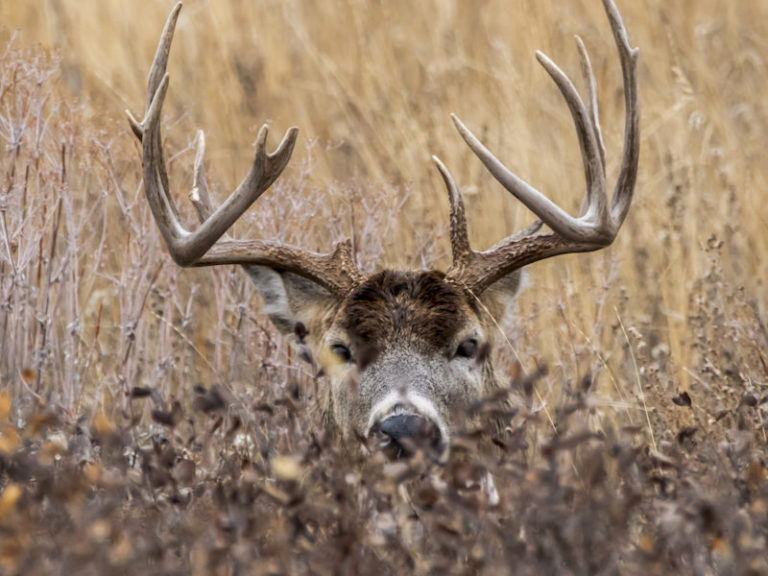
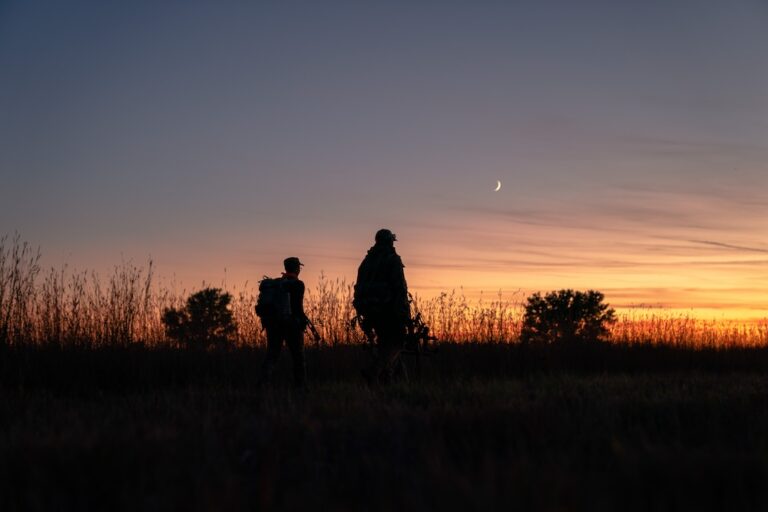
Deer aren’t technically nocturnal, but that doesn’t mean they make it easy for bowhunters to spot them when it’s light out. It’s a frustrating experience most bowhunters will have. You patiently sit in a treestand until it gets dark with nothing more than an annoying squirrel to keep you company. Legal shooting light comes and then goes. You carefully climb down the tree in the dark. It’s still light enough that you can see without a a headlamp. Then, just as your feet hit the ground, you hear the rustle of leaves and turn to catch a glimpse of antlers as a buck bolts through the woods. Had the buck arrived just a few minutes earlier, your patience would have paid off.
Bumping into deer in the dark or getting grainy black and white pictures of bucks on trail cameras is common. During hunting season, it can seem like deer only come out at night. But are they really nocturnal creatures? Technically, no—deer are crepuscular, a term that refers to animals that are most active during twilight hours, which are the hours before sunrise or after sunset.
Dr. Duane Diefenbach, a whitetail researcher with Penn State University, spent three years studying white-tailed deer movement during Pennsylvania’s rifle season in late November/early December. The data showed that bucks’ peak movement occurred between 6 a.m. and 8 a.m. and 5 p.m. and 7 p.m. Deer also moved around overnight but not as much. The least amount of movement occurred between 9 a.m. and 4 p.m. Diefenbach’s research also showed that after a few days of hunting pressure, deer shift their habits to be most active in the darker hours of twilight.
While deer aren’t truly nocturnal, moving during the narrow window of twilight makes hunting more difficult for bowhunters. Legal shooting hours in most states are a half-hour before sunrise and a half-hour after sunset. While this allows hunters to target bucks during twilight, that’s only a few minutes a day, especially if deer shift their habits due to increased hunting pressure. To give yourself the best shot at success, you need to be in a good position and ready during the first few minutes of shooting light and/or during the final minutes of shooting light.
With studies showing that deer move very little during the day, it’s a good bet that they’re in their bedding area. If a deer is bedded most of the day, when it gets up in the evening, it will likely travel to food and/or water.
This knowledge means that for an evening hunt, it’s probably a good plan to try to catch a buck moving from a bedding area to a food/water source. Scout locations to locate a runway that connects feeding areas to a bedding location. If it’s legal, hang a trail camera along the runway. This helps you pattern deer when dim light makes it hard to see. Hang a treestand or set up a ground blind close enough to catch deer coming out of the bedding area at twilight. Before selecting a location, it’s important to consider several factors. Be sure you can easily access the location without walking through the bedding area. While wind tends to switch, you want the wind to primarily blow away from the bedding area in the evening hours. If the wind is blowing into the bedding area, it’s a good night to skip that spot. Be sure you can get into position quietly. You want to be close enough to see deer before it’s too dark but far enough away to get into position undetected. Also, think about the position of the sun. If you plan to hunt the spot at last night, you don’t want to be blinded as the sun sets for the day.
This same spot may also work for a morning hunt, but, once again, it’s important to analyze deer activity and other factors. Deer will feed in the early morning hours before heading to a bedding location. You want to avoid walking through their feeding area in the dark to access the hunting location. You don’t want the wind blowing toward the feeding area, and you don’t want the sun rising in your eyes.
Whitetails don’t make it easy, especially once the days are shorter and the hunting pressure has increased. But with some strategy, patience and a little luck, you can outsmart these crepuscular creatures.