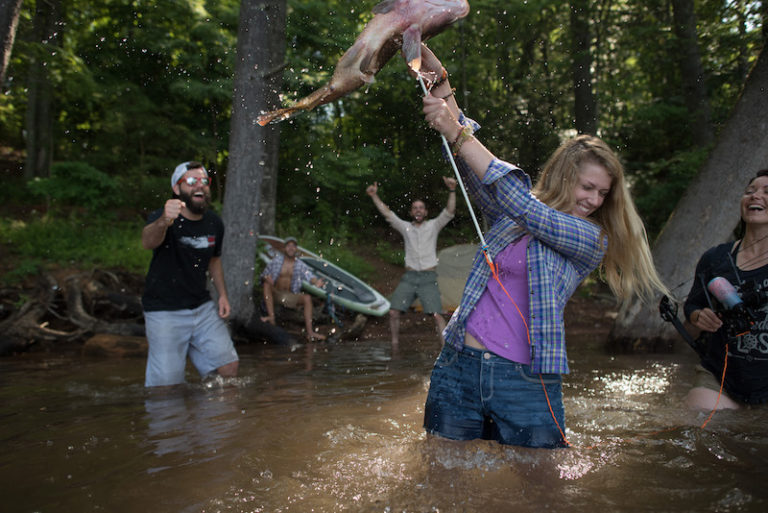
Although bowhunters enjoy long hunting seasons, they just don’t feel long enough. But you can extend your archery season by taking up bowfishing. Bowfishing is best during spring spawning runs and summer, when fish are in shallow water. That’s also the time of year bowhunting is closed for big game, so you can really extend your bowhunting all year round.
If you’d like to try bowfishing, friends who are already into the sport are great resources. They might lend you their bows to try out. They can also make equipment suggestions, bring you to productive bowfishing areas and answer your questions.
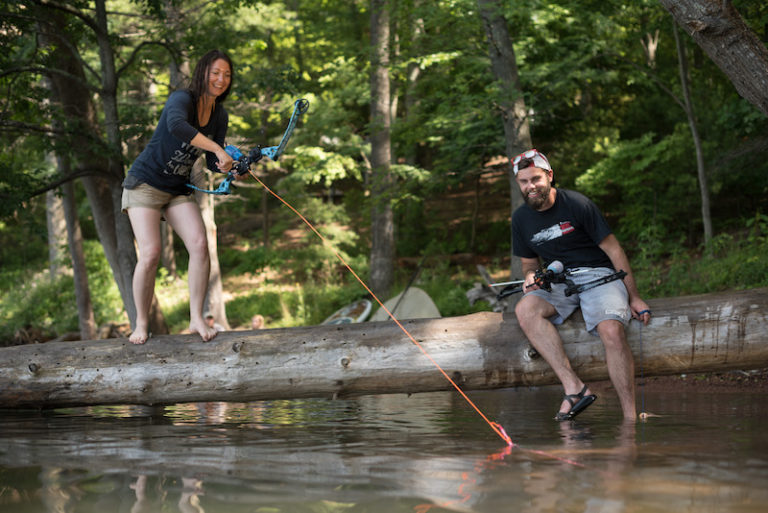
Your next stop is your local archery shop. Although you could bowfish with the same bow you use for whitetails, you’re better off purchasing a bow specifically for bowfishing, which calls for a lower draw weight. Shots are short and fast. You don’t need to draw 60 or 70 pounds. Shooting that kind of poundage may shatter arrows or drive them deep into mud. Your bow may also get dinged up from rubbing on boat rails and will (hopefully) end up smelling like fish. Additionally, your finely tuned sights will have to be removed (most bowfishers shoot instinctively, without sights). And you’ll need to add a reel to your bow to retrieve your catch.
An ideal bowfishing bow has a draw weight of only about 30 pounds. That’s sufficient to penetrate common fish like carp at short range. Plus, the low weight allows for quick, repeated shots without fatigue. You’ll also want a bow that can be fired from any point in the draw sequence, in case you get a quick shot at a fish. Short limbs are convenient as well, if you’ll be shooting from a boat equipped with safety rails (as many bowfishing-specific boats are). Several bowfishing-specific bow models are available, including compounds, recurves and hybrids between the two styles, such as the Oneida Eagle Osprey.
The beauty of bowfishing lies in its simplicity. You don’t need sights, but you do need to outfit your bow with a reel. A drum reel is a simple spool upon which you manually wind the line. Some bows are outfitted with oversized spin-casting reels (and short fishing rods) that pay out line at the shot (don’t forget to push the button first!). When you shoot a fish, you simply reel it in. The last option is a bottle-style reel, which looks like a water bottle. It functions like a spin-casting reel but just piles the line inside, instead of wrapping it neatly. Speaking of line, you’ll need heavy bowfishing-specific line, which is generally rated at 200-pound-test.
Bowfishing arrows are heavier than those you would use for big game, and they lack fletchings. They are typically made of fiberglass, which is heavy for good penetration through the water and affordable. Carbon/fiberglass hybrid arrows, which are lighter and stiffer, are also available. You’ll want to outfit your arrow (or buy complete arrows) with a fish point. A few styles are available, but they are all barbed and designed to penetrate and hold fish and then allow you to remove the arrow from the fish. Carp points are standard and work well for soft fish like carp and suckers. Grapple points penetrate tough fish like gar and are also effective on very large fish. Some points will need to be unscrewed fully from the shaft in order to remove the fish. But most points allow the barb to release the fish after just a couple of turns, without completely unscrewing the point from the arrow shaft.
In addition, you’ll want to attach a safety slide to your arrow. You secure your bowfishing line to the safety slide, which is free to run up and down the arrow shaft. Before you draw your bow, move the safety slide to the point end of the arrow. This keeps the line clear of the bowstring. When you retrieve a fish, the slide slides to the knock end of the arrow.
You’ll find bowfishing a little different from hunting whitetails. Because you’ll be shooting into the water, you’ll have to adjust your aim. Light refracts when it goes from air to water. As a result, fish are not where they appear to be. You actually have to aim under a fish to hit it. You can learn where to aim by sinking plastic bottles underwater and shooting them for practice.
You’ll also want polarized glasses to help you see better into the water during the day. However, many bowfishing trips take place at night, when fish are more active. Night bowfishers often rig up their boats with elaborate lighting systems and generators to power them.
But before you go whole hog and buy a boat specifically for bowfishing, try your luck during the day or hire a guide for a night trip.
Whether you’re looking for a way to turn archery into a year-round activity or introduce someone to the sport, bowfishing extends your season and brings the thrill of the hunt to the water.