Lonely and desperate to breed, a satellite bull is easier to call and hunt.
Like other members of the deer family, bull elk fight each other for dominance and breeding rights. However, unlike more solitary creatures like whitetails, who tend one estrus doe at a time, a dominant bull elk gathers up a harem of cows to breed. He travels with them, feeds with them and guards them from rival males.
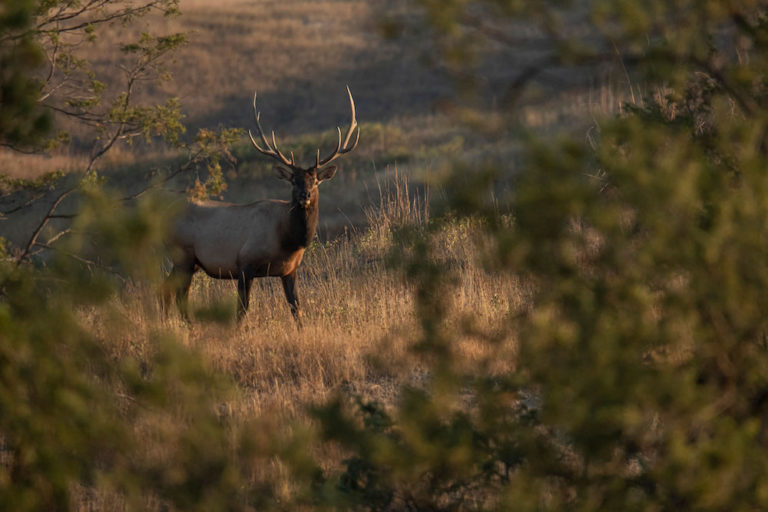
Inferior bulls — those who have challenged herd bulls and been beaten — are called satellite bulls. These can be young bulls who haven’t reached their physical peak, old bulls who are past their prime or adult bulls who simply don’t have the strength and vigor of the herd bull. They may sport small antlers, but not necessarily. Sometimes they sport impressive racks; they just can’t compete physically with the herd bull.
The herd bull drives inferior bulls away, but that doesn’t mean the satellite bull gives up his desire to breed. A satellite bull sticks relatively close to the herd bull and his harem, maybe a quarter- to a half-mile away. He stays far enough away that the dominant bull doesn’t have to constantly run him off, but close enough that he may be able to swoop in and breed one of the herd bull’s cows while the herd bull is distracted by a rival male or while breeding another cow.
The satellite bull is constantly alert. At any moment the herd bull may drive him off. And also, at any moment, the satellite bull may get a breeding opportunity.
Lurking in the shadows, the satellite bull doesn’t feed in the prime meadows with the other elk. He doesn’t run the same trails, but rather, parallel trails. He likes to be in an elevated, open position where he can keep tabs on the local herd bull and his harem.
He wants to breed, but he doesn’t want to get his butt kicked. As such, he is often an easy target for bowhunters, if elk can be considered easy targets.
Consider the difficulty in hunting the herd bull. Here’s an elk with a couple dozen cows, watching, listening and smelling for intruders. That’s a lot of senses to overcome. Getting within bow range of an entire elk herd is no easy task. Sure, you could try calling, but why would a bull leave his cows to come to a call? Even when a herd bull does respond, he will often hang up, reluctant to leave his cows or enter dark timber where he cannot see. He doesn’t need to come to a cow call because he’s already got cows. And if you make a rival bull call, he may just gather up his harem and lead them away from the perceived competition.
But now imagine a satellite bull. He’s solitary, so you only have one animal to outwit. And he’s got a craving to breed, making him highly susceptible to calling. True, he’s going to be wary. He doesn’t want another beating from a herd bull. But that desire to breed can be an overpowering motive.
Satellite bulls are highly susceptible to calling. You might try bugling to get him to bugle back and locate him, but for the most part, cow calls are the way to go. The satellite bull doesn’t want a fight; he wants to breed. If you do bugle, make it sound high-pitched and shorter, like an immature bull. Once you get the satellite bull to announce himself, switch to cow calls to pull him in.
If possible, make it easy for the satellite bull to approach. Satellite bulls are naturally wary, so give him a chance for a concealed approach where he can sneak in, rather than making him cross the open. If he readily responds to calls, let him come. If he goes silent or you lose track of him, periodically make more cow calls to get him moving again and keep tabs on him.
All elk are wary when called. They are naturally cautious of coming into places where they cannot see, like dark timber. And they will use their incredible sense of smell to confirm that their approach is safe, rather than foolishly rushing in. If you have a calling partner, position the caller 40 or 50 yards upwind. Hopefully as the bull circles downwind of the caller, he will come directly to the bowhunter.
If the bull hangs up, coax him in with soft cow calls. If he still won’t commit, try an immature bull call to give him the impression an inferior bull is going to get a chance to breed. That may be enough to convince him.
Elk hunters dream of shooting a magnificent herd bull, but slipping within bow range of a dominant bull and his cows can feel impossible. But a satellite bull doesn’t necessarily have a small rack, and his willingness to come to a cow call can make for an incredibly exciting hunt.