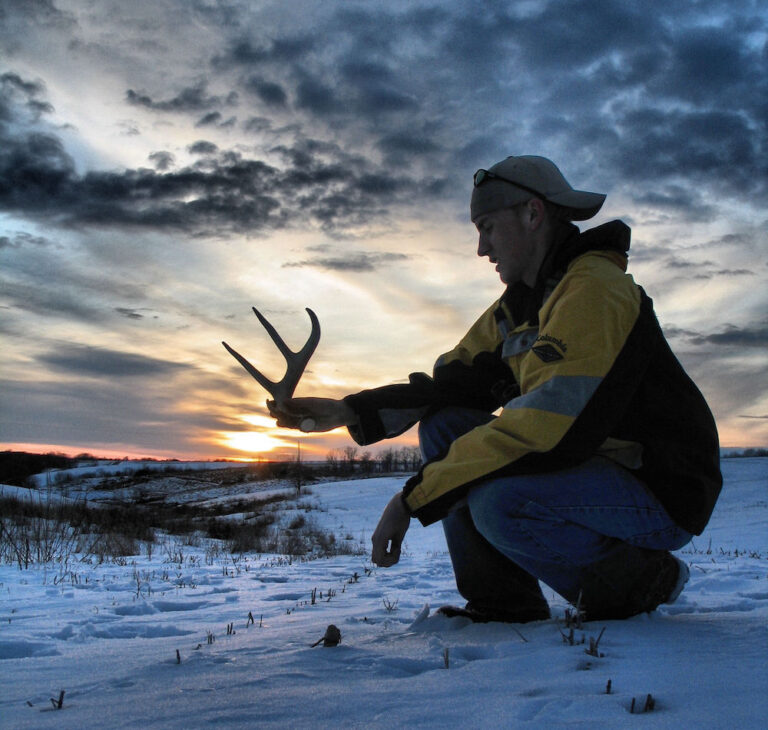
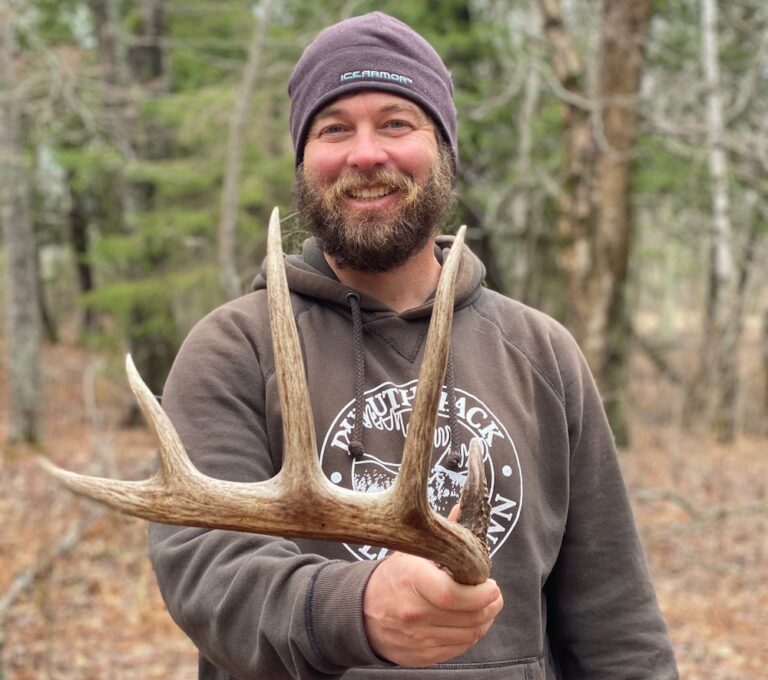
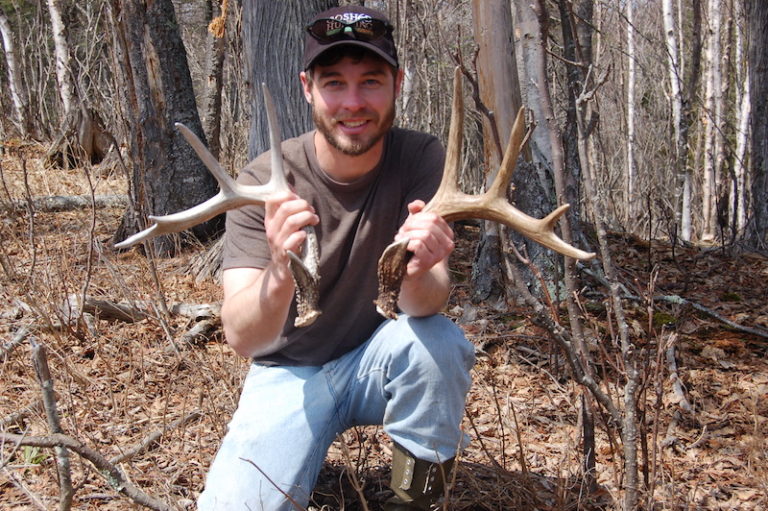
Collecting shed antlers—often called “shed hunting”—is a popular off-season activity for hunters and outdoor enthusiasts. It serves as a bridge between hunting seasons, offering both practical and personal rewards. All across the country this spring, antler enthusiasts will take to the fields, forests and mountains to look for naturally shed antlers from deer, elk and moose. But before you set out in search of sheds, you should be aware that some states regulate antler hunting. In fact, several states even require would-be shed seekers to take an online course before taking to the field.
In Utah and Nevada, you must pass the course and carry a certificate of completion with you in the field. The tests feature mostly commonsense questions that make shed hunters think about their impact on animals trying to survive on winter range.
Although most hunters could probably pass the test using their own intuition, the free courses which can be taken online in less than a half-hour are worth taking for any shed hunter. They may make you stop and consider your impact on wildlife and the landscape.
Seasonal closures to human access in several western states are intended to protect animals that must endure cold temperatures, harsh winds, deep snow and scarce food in order to survive. By closing certain wintering areas to all human activity, animals are left undisturbed and, thus, don’t waste unnecessary calories trying to avoid humans when their survival hangs in the balance. I recently took the Utah test and learned that even in a mild winter, there will be some loss of adult animals. In severe winters, fawn and calf survival can be as low as 60 percent, since these young animals don’t have the body size, fat content or ability to reach food that adults possess. A rough winter can reduce spring birth rates and newborn fawn/calf survival as well.
Much of the tests’ content focuses on why protecting animals during this critical time period is so important to their survival. However, the tests also cover topics such as trespassing and obtaining landowner permission. Other questions deal with the use of off-highway vehicles. Not only can these vehicles disturb animals, but they can also tear up native vegetation that provides nutrition to help these animals survive the winter. Still another pertinent topic to shed hunters is the legality of collecting the head and antlers of deceased animals.
In addition to requiring shed hunting courses, a few western states have special shed hunting regulations. See the list, below, for the rules by state. Also be aware that certain areas may be closed to all human intrusion in winter, and emergency orders can go into effect in tough winters. Check with the state game and fish department before you plan your shed hunt.
Colorado: Shed hunting is not allowed on public lands west of I-25 from Jan. 1 to April 30.
Idaho: Nonresidents must have a big game license to shed hunt.
Nevada: Seasonal public land shed hunting closure in certain areas from Jan. 1 to April 30. A certificate is required to collect sheds in those areas from May 1 to June 30.
Utah: A certificate is required to shed hunt on all lands from Jan. 1 to May 31.
Wyoming: Resident season (Collection Area 1) May 1 to Dec. 31. Nonresident season (Collection Area 1) May 8 to Dec. 31. A conservation stamp is required of nonresidents 15 or older to shed hunt in Collection Area 1.