Treestands and ground blinds are two of the most useful tools a whitetail bowhunter can own. I’ve successfully harvested deer from both, and each has situations where it shines. Choosing between them comes down to reading the terrain, understanding how deer use it and selecting the setup that gives you the best opportunity to make a clean shot.
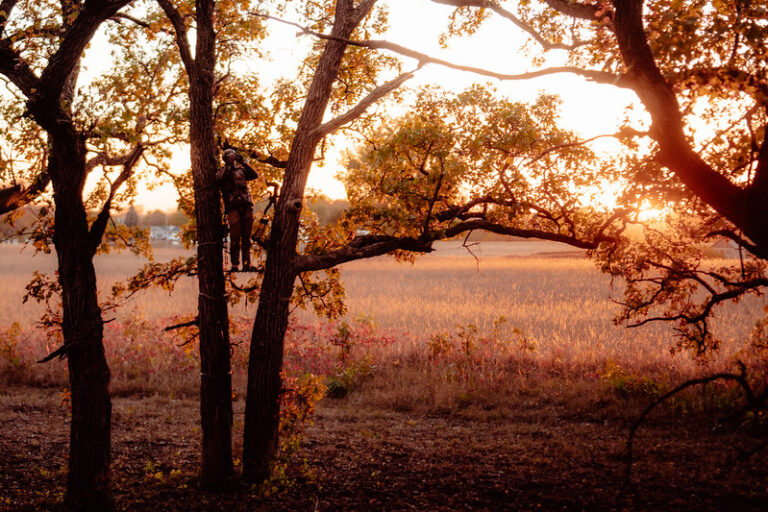
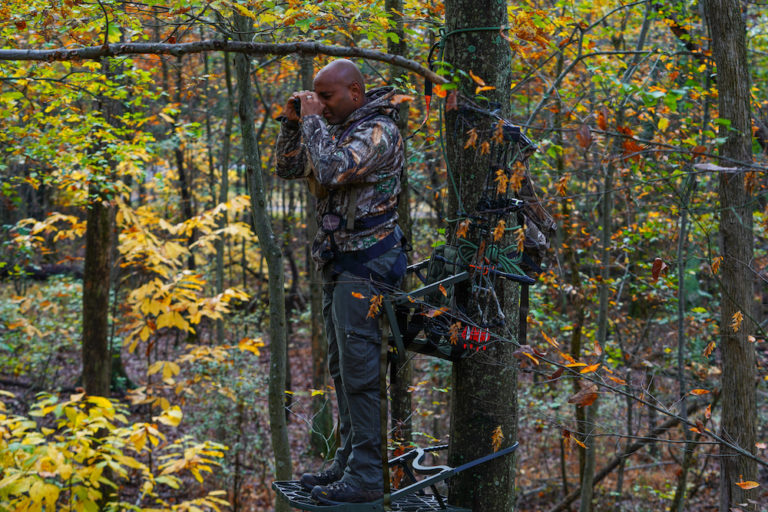
Getting elevated provides several advantages. First, it gets you above ground-level vegetation that can obstruct shooting lanes. Even gaining 10 or 15 feet of elevation can turn thick cover into a spot with multiple shot opportunities. Personally, I don’t go much higher than 15 feet when hunting from a treestand.
Elevation also helps keep you above a deer’s normal line of sight and can even work to your advantage with scent control. This is especially true during morning hunts on ridgetops when warming air creates rising thermals that can help carry your scent above deer traveling below you.
The higher you climb, the steeper your shot angle becomes. At close distances, this can dramatically reduce the size of the vital area your arrow can pass through. Understanding shot angles becomes increasingly important as you climb higher.
Treestands can also be intimidating if you’re uncomfortable with heights, and there’s no hiding from bad weather. Cold temperatures, wind, rain and snow can make an exposed treestand sit miserable.
Ground blinds solve several problems that treestands can’t. If you’re hunting grasslands, field edges, young timber or anywhere without a suitable tree, a blind lets you create a setup almost anywhere. They also give you a more forgiving shot angle. Instead of sending an arrow steeply downward through a deer, you’re shooting horizontally through the chest cavity, presenting a larger target at the same distance.
Nothing provides more concealment than a well-concealed ground blind. It’s difficult to reach full draw without getting picked off from a whitetail, but a ground blind lets you make most of that movement behind cover. Add protection from rain, snow and wind, and it’s easy to understand why blinds are especially appealing during nasty weather.
There are drawbacks. Personally, I sometimes feel “out of the hunt” inside a blind. Walls separate you from the sights and sounds that make bowhunting fun. They’re also bulky and generally less mobile than a treestand. Unless you can brush a ground blind into its surroundings effectively, I’d suggest giving deer a few days to get comfortable to a newly placed ground blind.
Personally, I’ll hunt from a tree whenever the situation allows it. Even if the only option puts me less than 10 feet off the ground, I prefer the visibility and immersive experience an elevated setup provides.
But that doesn’t mean a treestand is always the right answer. I’ve successfully harvested deer from both setups, and I look at each as another tool in my bowhunting toolbox. Sometimes the perfect tree is exactly where you need it. Other times, there isn’t a suitable tree within 100 yards. The important part is recognizing the difference and understanding how to adapt your tactics to the scenario you’re dealing with.
Rather than forcing your preferred hunting style into every situation, learn to use both treestands and ground blinds effectively. The more versatile you become with different equipment and tactics, the easier it is to adapt when the deer don’t cooperate with your original plan. That versatility might be exactly what puts a whitetail within bow range this fall.