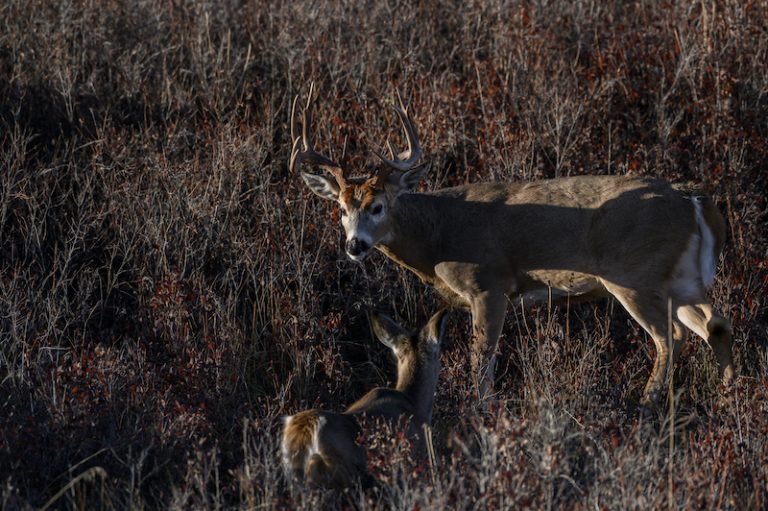
The whitetail rut is undoubtedly the best time to tag a mature buck. Normally wary whitetails let their hormones get the best of them when the breeding season arrives, moving more frequently during daylight hours and throwing caution to the wind, making them more susceptible to bowhunters.
The onset of the rut is determined by a variety of factors, including photoperiod (amount of daylight), moon phase, weather and likely other triggers we aren’t aware of. However, when it comes right down to it, the rut occurs about the same time every year. In fact, in Canada and the northern United States, it has to.
Whitetails have a 200-day gestation period. It’s critical in the North that fawns be born after the snow melts and about the time things green up, providing abundant forage for nursing does. It’s also important that fawns be born early enough in the spring so they can maximize growth before the onset of their first winter.
In southern areas, where winter is milder, the timing of the rut isn’t as critical. It’s much more variable down South. In fact, in some areas, deer may be in the pre-rut phase while deer within a different region of the same state may be at the peak rut or post-rut period.
Weather can also impact the exact timing of the rut. Hot weather tends to suppress rut activity, particularly in the North. Cold fronts can have the same affect in the South. Rain or snowstorms can also limit deer to their beds. And if there’s a full moon, it stands to reason more rutting activity will take place after dark, as night vision is improved.
Look at your local deer herd’s fawn crop any given spring, and it’s apparent that most does were bred the previous fall, likely within a short time of each other. But as bowhunters, we’re less concerned with actual rut activity (which could take place any time of day or night), and more with observed rut activity. We want to see bucks running around during daylight hours when we can hunt them.
To that end, a number of resources can help predict when rut activity will occur.
Probably the longest-tenured tool is Deer & Deer Hunting’s Whitetail Calendar, which includes activity information for all phases of the rut: seeking, chasing and tending. Developed by the late Charles Alsheimer, a long-time D&DH field-staffer who photographed and studied deer in his 35-acre enclosure. This calendar was among the first rut predictors and remains reliable to this day.
Of course, nowadays, mobile apps that you can pull up on all your phone are all the rage, and bowhunters will find several that can help them determine the best times to be in their treestands to take advantage of rut activity.
DeerCast is one such app. Developed by hunting celebrities Mark and Terry Drury, it draws on the brothers’ more than 90 years of combined whitetail hunting experiences. It gives hour-by-hour real-time algorithm-driven deer activity forecasts for up to 14 days at any location you choose, in addition to other features.
The HuntWise RutCast app is another option. This app is specific to the three phases of the whitetail rut. It factors in temperature, rut intensity, wind, barometric pressure, fronts and moon phases to help you time your hunts when bucks are most likely to be on the move.
onX gives Elite subscribers a Deer Movement Forecast, which is powered by real-time data leveraging more than 50 parameters related to deer behavior. The Deer Movement Forecast predicts the odds of increased deer activity where you hunt. With an Elite subscription, you can sync your trail cameras with the app to access numerous charts that show where, when and how deer are moving across a property.
HuntStand’s Whitetail Activity Forecast combines research on deer movements and proprietary rut data to predict the highest periods of deer activity. The Whitetail Activity Forecast uses more than a dozen geographic, date, time and weather variables — using thousands of data combinations — to predict rut activity for the next seven days.
The Spartan Forge app has an AI Deer Prediction model that provides movement and pattern predictions based on an analysis of historical and real-time data. The model was built using a combination of collared deer data, combined with historic weather information from around the country.
In addition to these methods, there are a host of other ways to monitor rut activity. Cellular trail cameras give you real-time deer movement information, sent right to your phone. You can also collaborate with hunting partners or discuss deer movements with other bowhunters on social media. Or you can always use the tried-and-true method of asking truck drivers, postal workers or farmers what they’re seeing day to day for deer activity. It has never been easier to dial in deer activity and set yourself up for a successful hunt!